
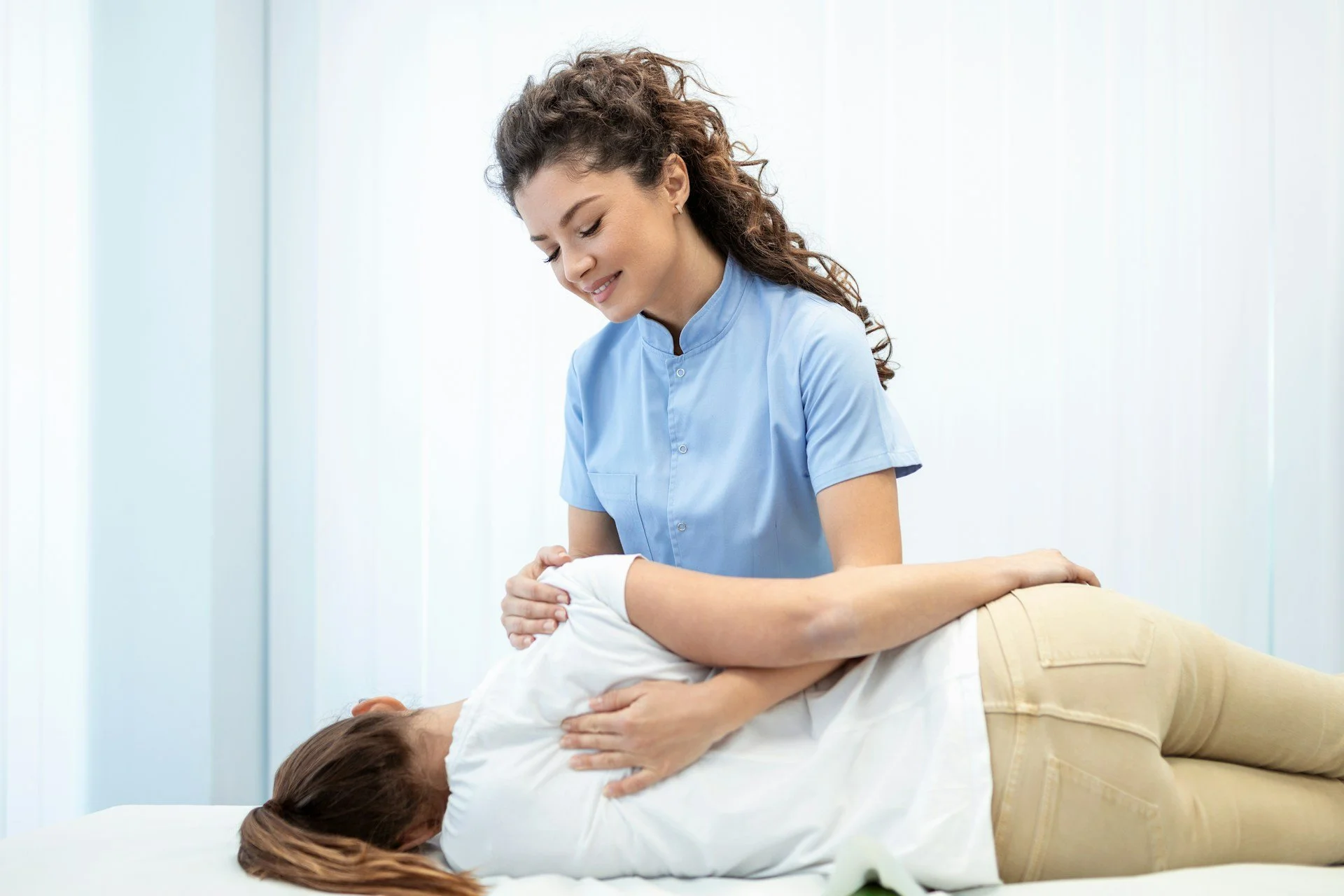
Chiropractic Adjustment or Rest: What's Better for Sciatica?
Sciatica can stop you in your tracks. That sharp, shooting pain that moves from the lower back down through the hips and legs can make the simplest movements feel hard.
When you're in the middle of a flare-up, it's common to wonder what will help most.
Is rest enough, or would something like a chiropractic adjustment give your body the support it needs?
With warmer months ahead across much of Australia, many people become more active, making it a good time to talk about how rest, movement, and spinal care each play a role when sciatica shows up.
Understanding Sciatica and Why It Hurts
Sciatica refers to irritation of the sciatic nerve, the thickest nerve in the body. It starts in the lower back, travels through the hips and buttocks, and runs down each leg. When this nerve gets pinched or inflamed, pain can appear suddenly or build up over time.
• People often describe sciatica as a sharp, burning, or tingling feeling, usually on one side of the body
• Long hours sitting, suddenly bending, lifting awkwardly, or staying inactive too long can all put added pressure on the lower spine
• Sometimes, the nerve gets compressed by spinal joints or tight muscles deep in the pelvis
Pain isn’t always constant. For some, it comes and goes based on how they sit or move. Others may feel it most when standing up or sleeping. Understanding what actions might trigger it is often the first step toward feeling better.
Does Rest Help or Make Things Worse?
When sciatica hits hard, it's normal to want to lie still. In the early stages of pain, short periods of rest can give the body a breather. Especially during those first hours or days of sharper discomfort, being gentle with movement may help reduce stress.
• Resting in a supportive position, like lying on your back with pillows under your knees, may feel more comfortable
• Avoid curling up or sinking too far into a lounge, which can push your pelvis into a shape that strains the lower back
• Short breaks throughout the day are often better than staying in one place for hours at a time
Having said this, too much time lying down can work against you. Muscles tighten when held too long in one position, blood flow slows, and joints can stiffen.
The key for many people is to balance short, helpful rest with small movements that keep the body from tightening up more.
How Movement Supports Healing
Even small movements can play a helpful role when you're working through sciatica. Unless the pain is too sharp to walk, gentle activity tends to help the body recover more steadily than lying still all day.
• Short walks, even around the house, can support nerve and blood flow
• Light stretching or gentle core support movements (done in line with what feels comfortable) may take pressure off the lower spine
• Keeping good posture when sitting or standing helps reduce extra strain on the irritated nerve
Moving more doesn't mean pushing through pain. It means listening to what your body will allow and avoiding heavy or jerky motions.
Can Chiropractic help sciatic pain?
When pain feels stuck, or movement doesn’t change much, it's natural to want another path.
A chiropractic adjustment is a hands-on way to improve how joints in the spine move. It involves gentle and specific movements applied to joints that may be restricted or not moving well, especially in the lower back or pelvis.
• By improving spinal motion, a chiropractic adjustment may help take pressure off areas irritating the sciatic nerve
• Smoother joint movement can lead to better muscle balance, which often helps the body move more freely
• For some, this type of care feels helpful when their regular habits haven’t made much difference
At Align Chiropractic, Dr. Martin Harvey and Dr. Kieran Whelan use our extensive experience to focus on relieving pressure in the spine, pelvis, and related muscles.
The care we provide is specific and individualised, with thorough assessments to identify the underlying factors contributing to pain. This patient-centred approach is designed to help people in South Melbourne and surrounding areas move more freely and recover from sciatica flare-ups with confidence.
It's not about cracking or forcing the spine. It's about looking at how things are moving and helping the body work in a more balanced way. Anything that reduces the everyday pressure on the lower nerves may shift how sciatica feels.
Finding Your Best Path Forward
Every body is different. What helps one person’s sciatica feel better might not be the same for someone else, which is why it makes sense to pay close attention. Being too still or too active can both stir things up. Figuring out that middle ground takes time, and some trial and error.
• Gentle movement, well-timed rest, and support from trusted health providers each play a part
• Summer usually means more plans, more travel, and more time outside, which many find puts new stresses on the spine
• Catching early signs of back or leg discomfort can help avoid longer flare-ups
When sciatica strikes, the goal isn’t just to get through the pain but to understand what your body needs to move and feel better long-term. Watching those patterns and adjusting your habits often makes a bigger difference than doing just one thing.
At Align Chiropractic, we understand how disruptive sciatica can be, especially during busy times of the year. Not sure whether movement, rest, or extra support is right for you? Discover how a well-timed chiropractic adjustment can support your spine and help relieve tension in your lower back and pelvis. We’re here to help you find what works for you. For guidance tailored to your needs, contact us to book a visit.
What Makes Neck Pain Feel Worse in Late Spring
Introduction
As the days grow warmer and Melbourne shifts into late spring, many of us start to feel the stirrings of summer. Longer daylight hours, changing routines, and bursts of outdoor activity can be uplifting after the winter stretch. But for some, this shift also brings a familiar ache in the neck and shoulders that seems to come out of nowhere.
We often hear clients mention that their neck pain feels sharper or more persistent this time of year. These are not isolated complaints. A chiropractor for neck pain will often notice seasonal patterns in discomfort. The way our environment changes in late spring can have more of an impact on our muscles and posture than we realise. Small shifts in daily habits can sneak up on your body and may lead to increased strain in your neck.
How Seasonal Changes Can Affect Your Neck
Late spring doesn’t just bring warmer air, it invites us outdoors and often asks more from our bodies. As we transition away from cooler, slower months, some muscle reactions can take us by surprise.
• Sudden changes in temperature, especially in the mornings and evenings, can cause neck muscles to tighten or stiffen
• Extra outdoor activity, such as weekend sports or walks, can involve new or repetitive movements in the upper back and neck
• Air conditioning becomes more common, especially indoors and in cars. Cold air blowing directly across the shoulders and neck can lead to tension building up without us noticing
Even something as simple as shifting from layering up in winter clothing to lighter garments can affect how our neck and shoulders respond throughout the day. The body adapts quickly in some ways and slowly in others. If our lifestyle speeds up but our spine or muscles haven’t caught up, it’s easy to understand why pain gets worse, rather than better.
Springtime Posture Triggers in Everyday Life
As late spring rolls in, our habits and surroundings change, sometimes in unexpected ways. And these changes can directly influence how we carry ourselves.
• Many of us move our home workspace to lighter spots like verandas, patios, or cafés. These more casual setups often lack proper support, which can put the neck in awkward positions
• Gardening becomes a common springtime activity. Weeding, planting, and digging often involve hunching forward, twisting, or looking down for long periods
• With sports restarting or events becoming more frequent, we're often lifting bags, supplies, or children without thinking much about it. All of these actions can place extra load on the neck and upper back
Posture isn't just about standing up straight. It's about how everyday movements add up over time. If we're consistently craning, slouching, or rotating without balance, the body eventually lets us know.
Stress Patterns and Sleep Shifts Around Spring
It’s not just our physical movements that affect the neck. Our thinking, sleeping, and daily rhythms play big roles too. Spring can be uplifting, but it’s also busy.
• Social calendars often fill up. With more outings, tasks, or travel plans, stress levels can rise, and that tension usually lands right between the shoulders
• Allergies tend to flare in spring. Along with discomfort, congestion may change how we sleep or breathe, leading some people to clench their jaw or hold their neck stiff
• Longer days and earlier sunrises can change sleep timing. Less restful sleep means muscles don’t recover properly overnight, leaving the neck more prone to discomfort the next day
Stress doesn’t always look like worry or anxiety. Some people feel it as extra tightness in the top of the shoulders or an ache that shows up when trying to relax. These clues are often overlooked but can be very telling.
How a Chiropractor for Neck Pain May Offer Support
If spring shifts are bringing more than just flowers and sunshine, it might be time to check in with how your body’s adapting. We often see how these seasonal shifts show up in the spine and surrounding muscles.
• By looking at posture, movement habits, and muscle function, we can help figure out what's contributing to increased neck pain
• Chiropractic adjustments may offer relief by addressing tension, improving joint movement, and reducing any areas that feel extra tight or restricted
• The most important part of support is often planning ahead, especially if neck tension seems to come back each year around the same time
All care at Align Chiropractic is delivered by highly experienced practitioners, Dr. Martin Harvey and Dr. Kieran Whelan, have decades of expertise in addressing neck pain, headaches, and posture-related issues. We take a personalised approach, assessing both spinal alignment and how individual lifestyle factors in South Melbourne can influence recurring neck discomfort.
Rather than chasing symptoms, it may be helpful to understand patterns. Spring routines don’t have to be painful. Sometimes it's just about giving the body a chance to reset and move in healthier ways.
Late Spring, Lasting Relief
Late spring brings a lot of change, most of it welcome. But if you’ve been noticing your neck feeling more achy than usual, there could be a reason behind it. Whether it's small shifts in daily posture, disrupted sleep, or more time running around, the neck often picks up the slack.
Take this time of year as a reminder to check in on your daily posture and movement habits. If tension or discomfort persists, working with experienced chiropractors in South Melbourne could help you move comfortably through the season and beyond.
As spring brings changes in temperature, activity, and sleep, subtle tension in your neck and shoulders can build up before you even notice. We help people uncover these patterns and support ongoing wellbeing with gentle, personalised care. When you need a chiropractor for neck pain who understands the impact of seasonal shifts, Align Chiropractic is here to help you feel your best. Reach out today to book a time that works for you.
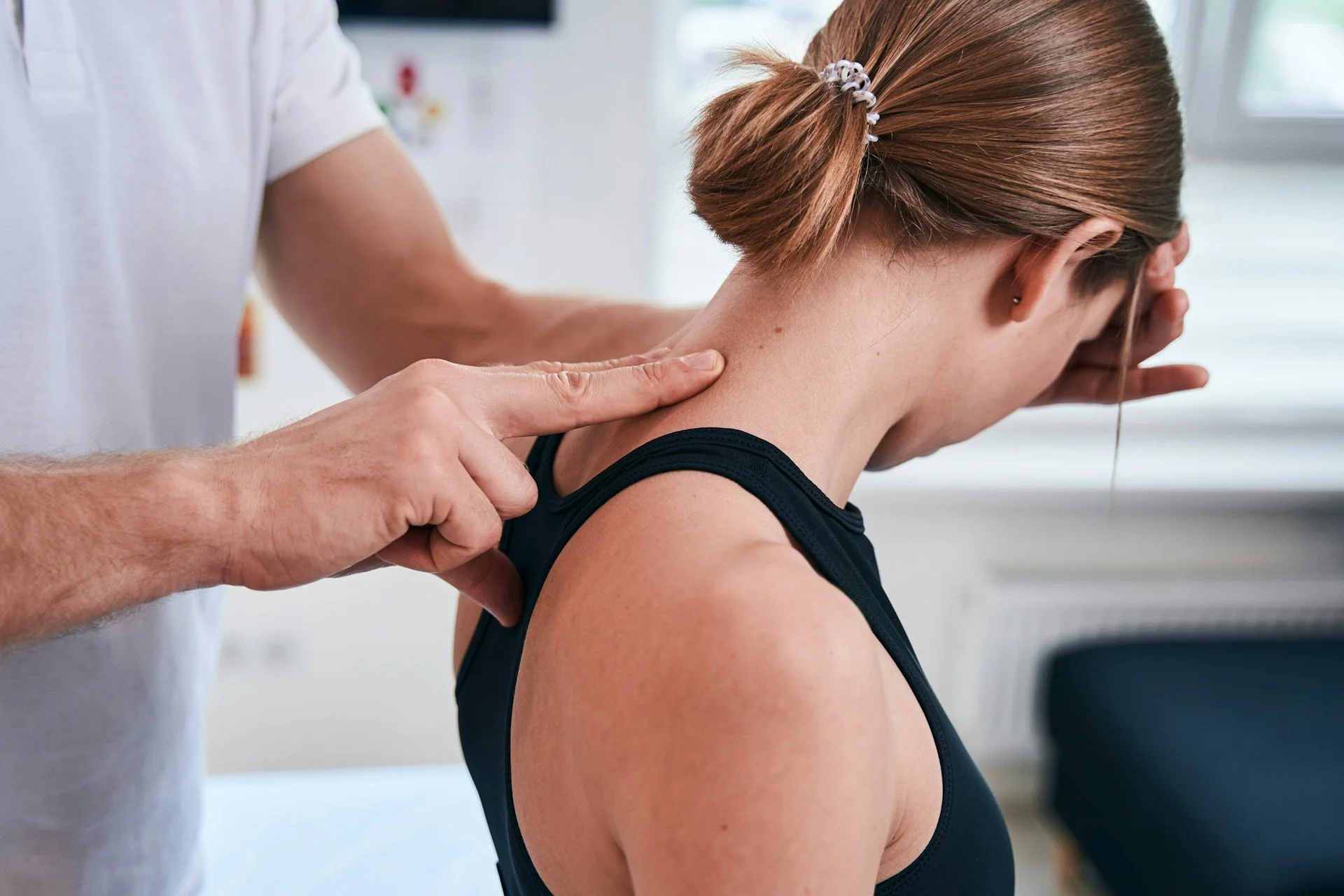
Why Neck Pain Can Hit Harder in Late Spring
As the days grow warmer and Melbourne shifts into late spring, many of us start to feel the stirrings of summer. Longer daylight hours, changing routines, and bursts of outdoor activity can be uplifting after the winter stretch. But for some, this shift also brings a familiar ache in the neck and shoulders that seems to come out of nowhere.
We often hear clients mention that their neck pain feels sharper or more persistent this time of year. These are not isolated complaints. A chiropractor for neck pain will often notice seasonal patterns in discomfort. The way our environment changes in late spring can have more of an impact on our muscles and posture than we realise. Small shifts in daily habits can sneak up on your body and may lead to increased strain in your neck.
How Seasonal Changes Can Affect Your Neck
Late spring doesn’t just bring warmer air, it invites us outdoors and often asks more from our bodies. As we transition away from cooler, slower months, some muscle reactions can take us by surprise.
• Sudden changes in temperature, especially in the mornings and evenings, can cause neck muscles to tighten or stiffen
• Extra outdoor activity, such as weekend sports or walks, can involve new or repetitive movements in the upper back and neck
• Air conditioning becomes more common, especially indoors and in cars. Cold air blowing directly across the shoulders and neck can lead to tension building up without us noticing
Even something as simple as shifting from layering up in winter clothing to lighter garments can affect how our neck and shoulders respond throughout the day. The body adapts quickly in some ways and slowly in others. If our lifestyle speeds up but our spine or muscles haven’t caught up, it’s easy to understand why pain gets worse, rather than better.
Springtime Posture Triggers in Everyday Life
As late spring rolls in, our habits and surroundings change, sometimes in unexpected ways. And these changes can directly influence how we carry ourselves.
• Many of us move our home workspace to lighter spots like verandas, patios, or cafés. These more casual setups often lack proper support, which can put the neck in awkward positions
• Gardening becomes a common springtime activity. Weeding, planting, and digging often involve hunching forward, twisting, or looking down for long periods
• With sports restarting or events becoming more frequent, we're often lifting bags, supplies, or children without thinking much about it. All of these actions can place extra load on the neck and upper back
Posture isn't just about standing up straight. It's about how everyday movements add up over time. If we're consistently craning, slouching, or rotating without balance, the body eventually lets us know.
Stress Patterns and Sleep Shifts Around Spring
It’s not just our physical movements that affect the neck. Our thinking, sleeping, and daily rhythms play big roles too. Spring can be uplifting, but it’s also busy.
• Social calendars often fill up. With more outings, tasks, or travel plans, stress levels can rise, and that tension usually lands right between the shoulders
• Allergies tend to flare in spring. Along with discomfort, congestion may change how we sleep or breathe, leading some people to clench their jaw or hold their neck stiff
• Longer days and earlier sunrises can change sleep timing. Less restful sleep means muscles don’t recover properly overnight, leaving the neck more prone to discomfort the next day
Stress doesn’t always look like worry or anxiety. Some people feel it as extra tightness in the top of the shoulders or an ache that shows up when trying to relax. These clues are often overlooked but can be very telling.
How a Chiropractor for Neck Pain May Offer Support
If spring shifts are bringing more than just flowers and sunshine, it might be time to check in with how your body’s adapting. We often see how these seasonal shifts show up in the spine and surrounding muscles.
• By looking at posture, movement habits, and muscle function, we can help figure out what's contributing to increased neck pain
• Chiropractic adjustments may offer relief by addressing tension, improving joint movement, and reducing any areas that feel extra tight or restricted
• The most important part of support is often planning ahead, especially if neck tension seems to come back each year around the same time
All care at Align Chiropractic is delivered by highly experienced practitioners, Dr. Martin Harvey and Dr. Kieran Whelan, have decades of expertise in addressing neck pain, headaches, and posture-related issues. We take a personalised approach, assessing both spinal alignment and how individual lifestyle factors in South Melbourne can influence recurring neck discomfort.
Rather than chasing symptoms, it may be helpful to understand patterns. Spring routines don’t have to be painful. Sometimes it's just about giving the body a chance to reset and move in healthier ways.
Late Spring, Lasting Relief
Late spring brings a lot of change, most of it welcome. But if you’ve been noticing your neck feeling more achy than usual, there could be a reason behind it. Whether it's small shifts in daily posture, disrupted sleep, or more time running around, the neck often picks up the slack.
Take this time of year as a reminder to check in on your daily posture and movement habits. If tension or discomfort persists, working with experienced chiropractors in South Melbourne could help you move comfortably through the season and beyond.
As spring brings changes in temperature, activity, and sleep, subtle tension in your neck and shoulders can build up before you even notice. We help people uncover these patterns and support ongoing wellbeing with gentle, personalised care. When you need a chiropractor for neck pain who understands the impact of seasonal shifts, Align Chiropractic is here to help you feel your best. Reach out today to book a time that works for you.
How Neck Issues Might Be Linked to Jaw Discomfort
Small posture habits can lead to discomfort. Learn how the jaw pain in the neck connection could be affecting your daily comfort and movement.
When people think about jaw pain, they usually do not think of their neck, but for many, the two can be more connected than you might expect. The link can be easy to miss, especially if the pain has crept in over time. You might feel it when you yawn, chew, or sit at your desk for too long. The jaw pain neck connection can be tricky. It is not always sharp or sudden. It might start off as a bit of tension or discomfort that slowly builds and spreads.
Paying closer attention to the way your neck lines up with the rest of your body could make a difference. Let us look at how the jaw and neck work together, and why posture might play a bigger role than you realise.
How the Jaw and Neck Are Physically Connected
The jaw and neck operate as a team. They share a group of muscles and joints that help us move our heads, chew food, speak, and maintain a steady posture. So when one area feels off, the other often tries to pick up the slack.
The muscles that move the jaw, like the ones used for chewing, are closely tied to muscles that support the neck and shoulders.
When you have poor posture, especially a forward head position, it can place more strain on these areas. That strain can pull on muscles around the jaw, creating pressure or tightness.
If the neck is restricted or out of balance, it might also change the way the jaw opens and closes. That can lead to uneven movement or added stress to one side.
So even if the pain feels like it is only in the jaw, part of the trouble could be coming from somewhere else.
Common Signs Your Jaw Pain Might Be Linked to Your Neck
It can be tricky to figure out where pain is really coming from, especially when symptoms overlap.
There are a few signs that might point to a connection between the jaw and neck.
You notice pain that travels from the neck to the jaw, or the other way around.
Your neck feels stiff, or it is hard to turn your head comfortably.
Holding your head up for long stretches (like working at a desk or scrolling on your phone) brings on more discomfort.
You feel a tight, dull ache in your temples, around your ears, or near your jaw joints when you clench.
There is a sense of pressure on the teeth or face, but not always any dental cause.
If these sound familiar, the discomfort might not be just about the jaw. Our bodies often work in
patterns, and noticing those patterns can help make sense of what you are feeling.
Everyday Habits That Might Be Affecting Your Neck Posture
Sometimes it is not just an injury or strain that causes pain. Habits throughout the day may
slowly nudge our posture out of alignment, putting stress on areas like the neck and jaw without us even realising it.
Looking down at phones or laptops for long periods can train your neck into a forward-leaning position.
Sitting with rounded shoulders or poor back support can shift your entire head forward, adding weight and pulling on your neck.
Sleeping on your stomach or with the wrong kind of pillow can push your neck into awkward angles for hours at a time.
One or two of these habits here and there will not usually cause big problems. But day after day, they can add up and put pressure on the muscles you rely on most.
What Support Might Look Like for Jaw and Neck Issues
When these kinds of problems show up, assessing posture and how the body moves can be a helpful first step. Every person is different, so it helps to focus on your own patterns and needs.
As chiropractors we start with a check of how your neck, shoulders, and jaw move and feel.
You might be shown small posture changes or gentle movements that aim to ease tension.
Instead of a quick fix, steady changes over time, like better desk habits or changes in sleeping positions, can bring more daily comfort.
At Align Chiropractic in South Melbourne, Dr Martin Harvey and Dr Kieran Whelan have over four decades of combined experience working with patients dealing with neck pain, jaw
discomfort, headaches, and posture-related issues. Their approach involves careful assessment and understanding of how these areas interact, with patients from Albert Park, Port Melbourne, St Kilda, and nearby suburbs seeking help for similar conditions.
Support often looks different from one person to the next. By learning what may be affecting you and making small shifts, your day-to-day comfort might improve bit by bit.
A Healthier, More Aligned You
We do not always think about how things like posture or screen time might affect other parts of the body. But the connection between the jaw and the neck is one that can make a real difference in how we feel from morning to night. Noticing patterns, listening to your body, and making small changes can sometimes help ease pain or tension. With a bit of awareness and the right kind of support, we believe many people can find more ease in how they sit, move, and rest.
Wondering why jaw pain seems to stick around with neck tension or stiffness? The way our muscles and joints interact means discomfort can often move or build across different areas. We often notice this in the jaw pain in the neck connection, which can sometimes go unnoticed. At Align Chiropractic, we focus on noticing these patterns to help guide the right kind of support. If some of these signs are sounding familiar, get in touch so we can chat about what might be happening and how we may help.
The Aligned Life Podcast: Episode 3
How Daylight Savings Can Wreck Your Week

Ever notice how one lost hour can throw everything off? You feel fine, but you’re not!
Focus slips. Energy crashes. You reach for more coffee and think it’s just a busy week - when it’s actually sleep debt.
This week, Martin and Kieran unpack what daylight savings really teaches us about sleep.
It’s not just about feeling tired, it’s about how even mild sleep loss messes with your brain, hormones, and mood.
They break down why your body treats sleep like oxygen, it’s not a luxury, and how to reset your rhythm when life (or the clock) knocks it out of sync.
🎧 Listen now on Apple Podcasts, Spotify or wherever else you listen to your new favourite podcasts!
Heres to better health and more restful days,
Dr Martin Harvey & Dr Kieran Whelan
P.S. Got a question for the show? Reply with “Podcast Q:” in the subject and we’ll queue it up. If this episode helps, hit reply and tell us what landed—or share it with a friend who needs a reset.
The aligned life podcast: Episode 2
Why meditation fails when you’re most stressed (and what actually helps)
This, the newest episode of the Aligned Life podcast is a simple “bottom-up” reset to calm your body first—so your mind can follow.

Hi there!
Ever been told to “just meditate”… when your brain is doing cartwheels?
Same. When stress is high, “top-down” tools (think: meditation, reframing, CBT) can feel impossible.
In today’s new episode of The Aligned Life, we flip the script:
The Stress Reset: Calm Your Body Before Your Mind
Martin and Kieran break down a bottom-up approach with simple body-led tactics that signal safety to your nervous system so your mind finally has space to exhale.
In 25 minutes, you’ll learn:
Why top-down tools fail when you’re overloaded (it’s not your fault - your frontal cortex is offline)!
The walk + breath combo we use to lower physiological arousal in minutes.
A 60-second posture reset that breaks the “shoulders-up, jaw-tight” loop.
When HIIT exercise can help and when it secretly fuels burnout.
How chiropractic adjustments may support nervous system adaptability (hello HRV!).
PLUS, as usual, Martin and Kieran discuss their local picks of the week, Halcyon Days and Italian Artisans in Albert Park because life’s more than stress!
Coming up: don’t forget The Stress Reset Challenge
We’re launching a 5-day, 5–20 min/day challenge to help you test what works in real life—walking, breathwork, micro-breaks, posture, and more. It’s open to everyone, not just patients. Details in the next episode.
To more calm days,
Dr Martin Harvey & Dr Kieran Whelan
P.S. Got a question for the show? Reply with “Podcast Q:” in the subject and we’ll queue it up. If this episode helps, hit reply and tell us what landed—or share it with a friend who needs a reset.
🎧 Listen now on Apple Podcasts, Spotify or wherever else you listen to your new favorite podcasts!
The aligned life podcast: Episode one

We’re thrilled to announce the very first episode of The Aligned Life Podcast, hosted by Dr. Martin Harvey and Dr. Kieran Whelan, chiropractors at Align Chiropractic in South Melbourne.
This podcast is all about helping you live a healthier, happier, more active life — with simple, natural, science-backed ways to boost your energy, improve your posture, sleep better, manage stress, and feel your best.
Episode 1: Stuck on Stress -
In this episode, Martin and Kieran dive into one of the biggest health challenges of our time: stress. They unpack why stress levels are on the rise, how it impacts your body and mind, and most importantly, what you can do about it.
Here’s what you’ll learn:
Why nearly half of Australians report high stress levels — and why it’s worse in cities.
How stress shows up physically (neck pain, headaches, posture changes, jaw clenching) and mentally (brain fog, anxiety, low mood).
The difference between “good stress” that helps us grow and “bad stress” that wears us down.
Top-down vs bottom-up strategies for managing stress — from meditation and journaling to chiropractic care, posture, exercise, breath-work, and even time in nature.
Sneak peek of the upcoming 5-Day Stress Reset Challenge, designed to help you move from theory to practice with easy, bite-sized tools you can try at home.
Takeaway: Stress isn’t just “in your head”, it’s in your body too but with the right strategies, you can break the cycle and reclaim calm, focus, and energy.
Tune in now to the first episode of The Aligned Life Podcast and start your journey to a more aligned, resilient life.
Give it a listen: on Apple Podcasts, Spotify, or wherever you get your podcasts.
Dive into the Chilly World of Cold Exposure: Unlocking the Benefits of Cold Water Immersion

The photo above is of Martin taking his very first ice bath. It was in September last year and he has been embracing the cold ever since. Martin started because he had heard that regular cold exposure was good for your health (more on that below) but have kept going because I feel great after every ice bath and cold shower.
Have you ever considered taking the plunge into cold water or braving a refreshing cold shower? You might think it sounds crazy, but let me tell you, the rewards are worth it! Cold exposure has some incredible benefits for your body and mind. So, let's chat about why embracing the cold can be a game-changer in your quest for overall well-being.
First off, when you expose yourself to the cold, something magical happens. Your brain and body release adrenaline and noradrenaline, which amp up your alertness and energy levels. It's like a natural boost that makes you feel alive and focused. As well, those effects last even after you've dried off!
So, if you've been feeling a little sluggish or struggling to concentrate, a cold shower or a dip in icy water might just be the jolt you need to kickstart your day.
Cold exposure isn't just about waking you up—it's also about building resilience and grit.
When you willingly subject yourself to the discomfort of the cold, you're training your mind to handle stress better. It's like a mental boot camp. By challenging yourself and pushing through the initial shock, you strengthen your ability to stay calm and composed when faced with real-life challenges. It's a skill that extends far beyond the cold showers. It's a superpower that helps you tackle whatever life throws your way.
Now, let's talk about mood enhancement. Who doesn't want a little extra happiness in their life? Cold exposure has got your back. When you expose yourself to the cold, your body releases dopamine—a neurotransmitter responsible for pleasure and motivation. And let me tell you, dopamine is a game-changer. It lifts your mood, boosts your energy, and enhances your focus and productivity. So, the next time you're feeling a bit down or lacking motivation, why not take a dip in cold water and let the dopamine work its magic?
Oh, and here's an interesting tidbit: cold exposure can actually rev up your metabolism. When your body is exposed to cold temperatures, it has to work harder to keep you warm. That extra effort translates into burning more calories. But the real kicker is the transformation of white fat into beige or brown fat. Unlike white fat, these metabolically active fats keep your body humming, giving you that extra edge in your weight management journey.
So, it's time to embrace the cold and reap the rewards. Start with shorter cold showers and work your way up to longer durations or even try an invigorating ice bath. Listen to your body, take it one step at a time, and enjoy the benefits of increased energy, resilience, enhanced mood, and a revved-up metabolism. Trust me, your body and mind will thank you for taking the plunge into the chilly world of cold exposure. It's time to make waves and dive into a whole new level of well-being.
If you’re keen to take the plunge we have arranged an ice bath event for Align Clients at The Recovery Lab, Windsor. It’s on Saturday June 17th from 7am- 8am. The ice baths will be at around 8 degrees and we suggest that you aim to do around 3 minutes. Martin will do a brief talk about strategies you can use to do the ice bath (and enjoy the experience) and then you will get a chance to take the plunge! Tickets are available here.
Are you tired of headaches holding you back?
Tired of being held back by headaches?
Spinal Health Week 2023 was 22-28 May and it is here to help!
It's a national campaign by the Australian Chiropractors Association (ACA) that focuses on improving spinal health for all Australians.
This year, Spinal Health Week highlighted the impact of headaches and providing solutions to relieve your pain. Did you know that over 7 million Australians suffer from tension headaches and more than 4.9 million have chronic migraines?
The cost to the country is a whopping $35.7 billion every year. But the real cost is immeasurable—headaches affect 46% of Australians daily, causing pain, disrupting work and study, and stealing quality time with loved ones.
Headaches come in different types and have various triggers. Some are mild inconveniences, while others can be severe and chronic, severely impacting daily life. Research shows that spinal health, especially in the neck, is closely connected to headaches. That's why it's important for headache sufferers to have their spines checked and consider drug-free chiropractic care. Along with some simple lifestyle changes, this approach can go a long way in reducing pain, preventing headaches, and helping you regain control of your life.
Studies have shown that chiropractic care is effective for the most common headaches: tension headaches, cervicogenic headaches (neck-related), and migraines. In fact, chiropractic adjustments have been shown to reduce migraines in 72% of people surveyed, decreasing their duration and severity. While pain medications may provide temporary relief, they only treat the symptoms and not the underlying cause. Lifestyle factors, like diet and sedentary habits, can also contribute to headaches. Chiropractors can identify these factors and help you make changes to manage or even avoid headaches, improving your overall well-being.
At Align Chiropractic, our team of ACA-accredited chiropractors are trained to find the causes of headaches and provide safe, drug-free care for people of all ages. If you or someone you know is among the 11.9 million Australians suffering from headaches or migraines, it's time to take action.
Contact us today at 03 9696 1057 or book online at alignchiropractic.com.au to schedule an appointment and regain control of your life.
For more information on the importance of spinal health and how it affects you and your family, visit spinalhealthweek.org.au. Join the #SpinalHealthWeek movement and say goodbye to headaches holding you back!
#SpinalHealthWeek #ConsultAChiro #Headache #HeadacheConsultAChiro #southmelbourne #albertpark
What are the benefits of NOT eating?
Intermittent fasting has been gaining popularity in recent years as a way to improve health and lose weight. But what exactly is intermittent fasting and why should you consider incorporating it into your lifestyle?
Through February, the team at Align Chiropractic will be doing a 28-day "Fast Start" Intermittent Fasting Program based on the approach from "Fast, Feast, Repeat," and we would love for you to join us. It will be a great way to give your health a kickstart and maybe even lose weight.
We will be hosting a 1-hour "Intermittent Fasting" info session.
On Zoom at 12:30 on Thursday, January 25th. It’s free and you can register here.
The "Feb Fast" challenge will kick off on February 1st.
Intermittent fasting is a pattern of eating that involves regular periods of fasting, followed by periods of eating. There are several different methods of intermittent fasting, including the 16/8 method, the 5:2 diet, and alternate day fasting.
One of the main benefits of intermittent fasting is weight loss. When you fast, your body is forced to use stored fat as energy, which can lead to weight loss. In addition, intermittent fasting may help to regulate appetite and reduce cravings for unhealthy foods. A review of intermittent fasting studies found that it was an effective way to lose weight and improve metabolic health markers.
But weight loss is just the tip of the iceberg when it comes to the benefits of intermittent fasting. Studies have shown that intermittent fasting can have a number of other health benefits, including:
Improved insulin sensitivity: A study in people with type 2 diabetes found that intermittent fasting led to improvements in insulin sensitivity and blood sugar control.
Decreased inflammation: A review of studies found that intermittent fasting may reduce inflammation in the body.
Increased lifespan: Some animal studies have suggested that intermittent fasting may increase lifespan by promoting cellular repair and reducing oxidative stress.
Improved mental clarity: Many people report increased mental clarity and focus while fasting, which may be due to the increased production of brain-derived neurotrophic factor (BDNF).
Intermittent fasting is not for everyone. However, for those who are able to incorporate it into their lifestyle, the benefits of intermittent fasting can be numerous and significant. So why not join the team at Align Chiropractic and give it a try? You might just find that it works for you.
Research Exposure Therapy 1. A Case study on mood.
OK so this one might be a little different.
I thought that this year I would do something I have never done here before and actually use this blog space more like an ongoing blog.
To remain registered as a chiropractor, Martin and I have to meet certain standards, and part of those standards is ongoing education.
Often Martin and I will find ourselves reading research papers or hear about new research that changes how we practice, or has us excited about how we practice that has significant impact for the clients that we are lucky enough to see.
As always, we meet weekly, discuss the information and then try to implement it into our practice as we constantly strive to improve our care, but there might be a lot of you who are actually keen to learn along with us.
Which leads me to this post, I am not sure what form this will take eventually, but what I was wanting to do with them is not to just present the information like a summary of the research, but I would love for people to see what information is out there and then understand why it is significant to us at Align and you as a client.
I’m not intending to explain the methods etc, though I will always provide the citation for you. My goal is to outline what is some interesting research I have come across, and hopefully encourage people to understand more, perhaps it will be relevant to them or to a loved one, but we would like to encourage you to discuss it with Martin or myself if it does pique your interest.
So without further preamble. The research:
Hughes F. (2020) “Reduction of cortisol levels and perceived anxiety in a patient undergoing Chiropracticmanagement for neck pain and headache: a caseReport and review of the literature,” Journal of Contemporary Chiropractic, https://journal.parker.edu/index.php/jcc/article/view/95
Now to start with, a disclaimer, this is a case study only and as such is a starting point for further research, NOT a definitive research answer. Individual results of care may vary. If you have any questions about research design and why some are more highly valued compared to others, please ask Martin or myself.
In this case study, a chiropractor was managing the care of a lady suffering from neck pain and headaches.
As part of the care provided, the chiropractor had the client complete surveys regarding her mental state as well as for pain etc. and the client also had her cortisol (or stress chemical) levels measured at the outset and as reassessment points in her care.
What was discovered was that through ongoing chiropractic care including adjustment and home advice, not only did her neck pain and headaches improve, but the client’s cortisol levels decreased significantly as well as the client herself feeling less anxious in her day to day life.
This particularly stood out to us as anxiety was NOT what the client was intending to have managed by the chiropractor, nor was it the focus of the chiropractor’s care plan for the client, yet areas outside the initial complaint significantly improved, creating a better quality of life for the client.
This was significant to me as it certainly reflects what we often see in practice with out clients. Often we will have clients state how much more relaxed they feel after an adjustment, or that they can breathe easier, or a “weight has been lifted from their shoulders”.
This has been particularly common throughout the last 2 years as we have had…lets say more stress than is normal in our day to day lives because of the pandemic.
The main reason I was inspired to write something here though is because often when we are busy or when people have significant injuries etc that we are managing, as a practitioner it is easy for us to focus on just the issue clients might present with and in doing so, we might be missing significant contributing elements.
For clients this might be more important, as imagine if there was another issue you were putting up with and even though myself or Martin were in a position to help, we are not aware that we could be working with you to get on top of other issues at the same time.
At Align we use specific surveys to get a snap shot of where a client will be in regard to mood, energy, concentration and attempt to track these over time, but going forward, I want to make sure I am encouraging our clients to make sure they are getting the most out of their care.
If there is something else bothering you or you aren’t sure we could help with, then we would love for you to feel free to ask us. Hopefully we are in a position to help you, but even if we are not, I am confident that we will be able to find the right person who CAN help you with whatever issue you might have.
The advantage of being a practice that is over 30 years old is that we have contacts in many fields to help clients get where they need to go, because sometimes chiropractic, as wonderful as it is not the answer. But I bet we can find someone for you who is.
So next time you get adjusted, pay attention to how you feel, do you feel more relaxed? More alert? Sharper? Freer? We’d love to hear about what you find.
Still working from home? How to keep your Neck and shoulders moving
Even though Melbourne will be thawing out of Lock down 4.0, we are aware that a lot of our clients will still be working from home again for a while.
If this is you, Its very important that you keep on top of your spinal health while you re adjust to working from home for the foreseeable future.
Fortunately, during Lockdown 2.0, Martin made this comprehensive video outlining everything you can do to keep yourself moving stay on top of your posture, and free up a lot of the tension you have felt building, especially over the last few weeks of lock downs.
Avid readers of this blog will note that we posted this video in September last year, but given recent events, I feel like Martin’s video couldn’t be more poignant so I am reposting for your convenience.
If you have a specific issue please do not hesitate to contact the practice so we can see how we can keep you going.
As usual with our videos, the transcript is available below, but I strongly recommend you have a watch as Martin runs through some excellent tips, stretches, exercises and muscle releases that will have you feeling a lot more yourself during this period.
The video has a few sections so if you REALLY felt like it you can skip to a section you find most relevant, however the way that Martin has filmed it the segments build on each other to get the most out of each one.
Enjoy!
2:00 Todays video is about...
3:52- Where to begin?
4:15 Rotational Movements of the Neck
5:32 Lateral Flexion of the Neck
7:12 Flexion/ Extension of the Neck
8:07 Shoulder Exercise
9:28- 3 exercises to open shoulders
13:48- Overhead position for shoulders
14:54- Focus on Alignment
17:23- Intro Spikey Ball Exercise
18:27 Beginning of Spikey Ball Exercise
23:27 Conclusion
Hi, Martin here from Align Chiropractic. Today's video is a follow along video, meaning I'm going to be taking you through some things that you can do, and you can more or less just watch the video and follow on.
So, the purpose of this video, it's really about moving your upper spine, your neck, your shoulders, your middle back to get mobility in those areas but also to soothe those areas.
It's really based on the clinical model that we use in our practice where we see that there's a real benefit in looking at the spine in kind of a sequential way, that spinal problems generally what's happening is that segments of the spine rather than having the ability to move through their full range of motion and kind of jammed up from either trauma, or long periods of time in particular postures, or stress tightening up the muscles around it.
And then as the joints jam up that changes the way the nerves and muscles and all the other soft tissues work, which then changes the alignment of your spine, and this change in movement and alignment of the vertebra causes misfiring of nerves which has a whole range of effects on your body, but specifically it can affect your ability to kind of balance the whole system.
If you're not balancing the whole system then your spine's going to be less stable. It's much more common for you to have problems with your back, your neck and the rest of your body if things aren't stable. So, if we look at that it goes movement, then alignment, then balance, then stability and so a common thing that I’ll see is people talking about ‘I need to do stability work or core stability work’.
I actually think it's really important that we do the basics first we've got to get movement happening first, and then once we've got movement, then we want to have a proper alignment so that when we're stabilizing first of all it's more effective, but we're also locking in a good movement pattern and a good alignment pattern rather than locking in poor ones.
2:00 TODAYS VIDEO IS ABOUT...
So this one specifically, today's video is really about dealing with this upper part of the spine because many of us are locked into these postures working at a desk or the effect of stress tightens up our neck and shoulder muscles and pushes our head posture forward and so this is really about restoring movement to those areas and then getting our alignment back into that nice upright posture.
I'm also going to be combining some approaches that come from new research into the interplay between how we breathe and our stress response and in particular if you want to dive deeper into this, there's a neuroscientist called Andrew Hubermann who's based at University of California, sorry based at Stanford and we're going to be using a couple of different approaches to breathing that we're combining with the movement approach and using a ball- spikey ball, or a tennis ball, or a lacrosse ball that we'll be using to just release muscle tension and some of that will be just I'll be cueing you to breathe in through your nose, and then we'll also be using an approach called a physiological sigh, which is really where you just take in a deep breath through your nose and then another deep breath through your nose before
letting it out and the emerging evidence is that this is a really quick and easy way of us helping to unwind some of the neurological effects of stress which we know can have really significant impacts on how we feel and how healthy we are. So, let's dive straight into this follow along routine to help release tension in neck, shoulders, upper back, and get movement into those areas so that you can have a healthier, happier, more active body
3:52- WHERE TO BEGIN?
Well the first thing that we want to do is we want to encourage movement back into the neck, so with the postures that we've been in and the lack of movement and there's a tendency for our neck to kind of stiffen up, and there's a segmental part of that which is what wewould address in office with an adjustment, then there's kind of an overall regional movement that we can address with exercise.
4:15 ROTATIONAL MOVEMENTS OF THE NECK
So first movement we're going to do is we're going to be doing rotational movements. With this I just want you to be taking nice slow breaths, in through the nose, out through the mouth.
So first of all just turn your head all the way to the left, and then go all the way to the right. I'm going to go through this five times each way, and we're not pushing we're just holding at that end range- nice and gently.
Let's see it just easing into it letting your shoulders drop, just letting that tension, that sort of habitual tension ease away. That's it. I think that's four, probably need a better way to count to be able to do this. Okay, I'm going to say that's five.
5:32 LATERAL FLEXION OF THE NECK
So next we're going be moving into lateral flexion so we just need to be cautious with this, if you get any pinching, any sort of sharp sensation that says you don't want to go that far, you want to stop before that point.
All of these mobility things are done within what feels just you're touching that point of tension or restriction. So sideways it's going all the way over there.
I'm just pausing at that end range, maybe a count of three. Just working our way into that range, just getting every vertebrae in our neck and even into our upper back starting to move.
This is our third one. Maybe just pause a little bit longer there, any sort of knotty points you can just almost sort of focus on it, just get that movement happening, just nodding a little bit back and forward. Okay that's four. So one more to go.
Last round for lateral flexion. Lateral flexion's actually a really important movement there's not many day-to-day activities that we do to encourage this range of motion, so it's often an exercise that we'll have people do because getting lateral flexion actually encourages movement in the other range.
7:12 FLEXION/ EXTENSION OF THE NECK
So now we're going to go flexion/ Extension. Flexion I'm going to get you to go nice and gently on, because we all tend to spend a lot more time in flexion than we do an extension. With extension which is the one going back, again just be really mindful that you don'twant to be getting any pinching sensation with that. With this one I'm doing it up against the wall. If you feel any dizziness with this then back off, maybe skip this part of it. This is our last one, our fifth repetition. Okay.
8:07 SHOULDER EXERCISE
Now functionally interlinked with your neck is your shoulders, and so again all this time spent like this, there's an alignment component of that, but before we can really address the alignment we've got to get the ability for these joints to move, so first up I’m going to do a stretch across the body, trying not to mess up my mic here.
So come all the way across, and we're just going to breathe in through the nose, and out. I'm going to do this one for three breaths. Just going to go a little bit further on this third one. Okay and then we're going to swap our arms. Bringing the arm across, the other arm just hooks in next to the elbow there. Breathe in, out. Breathe in, and out.
9:28- 3 EXERCISES TO OPEN SHOULDERS
So, it started to get some mobility, but really if we want to be able to bring our shoulders back which is what most of us need because so much of our activity is in front of us, we want to be opening up and restoring that movement that way.
So what we're going to do here is spend sort of three exercises bringing and opening up this in the front of our shoulder.
The first one what we're going to do here is we're going to put our hand up on the wall above horizontal, so if that's horizontal first one we want is up here, and then i've got my body sort of facing away there my elbow is straight, and then i'm turning out this way, and then i'm going to do three breaths there. So in through the nose, and out. That’s two. I can just rotate a little bit more, and three.
I'm just going to take that tension off, and now i'm going to that horizontal level, and it'll feel a little bit different, it's going to hit a slightly different part of the shoulder.
So again in through the nose, and out through the mouth. And three. Now we're just going to do just below horizontal to again getslightly different part of the shoulder.
We're going to come across. One, Two, that’s three. Okay, so now we're going to repeat exactly the same thing but on the opposite side. So first one, if that's horizontal we're going up maybe 30 degrees above horizontal, rotating away feeling the stretch at the front of the shoulder maybe a little bit into the arm. One, Two, That's three.
Then we're going to a horizontal point now, taking that stretch back up, and then in through the nose, out through the mouth. That's three. So, I'm going to get out just below horizontal one there, take that stretch up. And then in through the nose, and out. Then that's it, just move your shoulders around enjoy that extra mobility there.
13:48- OVERHEAD POSITION FOR SHOULDERS
So next what we're going to be working on is bringing up into flexion or sort of like an overhead position for our shoulders. So, with this I'm standing sort of basically like arm length away from a wall, and I reach out, I put my hands down keeping my elbows straight and then what i'm doing from here is keeping my arms straight and dropping my body all the way down.
I'm not rounding my back, I'm keeping my back quite straight, and then getting that movement back into the shoulders giving them that full range. We're just going to do three breaths here, so in through the nose and then out.
14:54- FOCUS ON ALIGNMENT
So next what we're going to do is move on from looking at movement and we're going to focus instead on alignment. What we're really wanting to do is to reverse that tendency that we all have to have this sort of position, and so what we're going to do is do an exercise called a W exercise, which is where you make your arms into a W shape with the thumbs facing backward.
I always like to sort of correct the head posture so pull your head back, and I also like to look up slightly because that helps just release the activation here. What we're really wanting to do is use these muscles down here in between our shoulder blades. So, make the W shape look up slightly and then what we're doing is trying to not use these muscles but use those ones in between your shoulder blades.
We're squeezing back one two three. Relaxing one, two, three. One, two, three. One two, three. We're going to go for ten so that's four, three. One, two, three, so I'm going to say that one's four, and five
Six. If it's getting uncomfortable, if things are starting to burn just take a little break, six and seven.
So it's kind of this back and down movement that we're after- just caught myself looking down too much. Nine and last one. Good.
What we've done there is really kind of reset our alignment, and that'll mean that rather than when your heads forward everything through has to be working overtime just to stop your head from going forward with gravity. So we're going to use that we've gotmovement, we've got alignment.
SPIKEY BALL: 17:23
Now what I want to do is just kind of soothe this area. We're all doing a lot of this, let's just work through with some pressure on those areas, and for this i'm going to suggest that you use a ball, a spiky ball. In this case this is a lacrosse ball, and what we're going to start with is we're going to be doing three individual spots. We're going to be doing one right in between the spine and the shoulder blade here, then we're going to be doing one that's up, almost on the meaty bit above your shoulder blade, and then we're going to be doing this little corner in here where your arm joins onto your shoulder blade there.
We're going to do that on each side. We're going to use that slightly different breathing where rather than just breathing in through your nose and then out through your mouth, if you want to experiment with it, this is a really good place to use that physiological sigh, which just helps reset our nervous system from a stress sort of state, into what they call a parasympathetic state, which is putting your nervous system in a state to promote rest and relaxation and kind of de-stressing.
18:27 BEGINNING OF SPIKEY BALL EXERCISE
So let's start off. You put the ball against the wall, and then just drop it down a little bit so you can get into that spot and rather than rolling around, what I like to do for this is just find a tender spot, hold pressure there. And then we're going to go breathe in through the nose, and then second breath, and then out. So just moving into a slightly different spot there.
Breathe in, second breath, and out. Breathe in.
Now we're going to move to the top of the shoulder. So, for this one you almost need to angle back a little bit. I'm just going to find that fleshy bit there. All right so I’m going to breathe in. Okay, so that's our three breaths there. Now for this one, I've got a really a choice of going on the actual arm here, or for most people this area in the side of the shoulder blades the spot that you want to hit, so I'm going to hit that one.
If you're doing this by yourself you could maybe do an extra round where you go to the other one if you're feeling tender in both, but I'm on the side of the shoulder blade.
The easiest way of getting there is having your body sort of on a 45-degree angle there, just finding that tender spot- okay that's definitely it. And so I'm going to breathe in through my nose, that's number two, let's go for number three- that's a really tender one.
Okay, so now what we're going to do- oops dropped my ball. And i'm back. All right so same sequence, we're just going to do the opposite side. So again, ball against the wall, I'm just going to roll into that spot just next to my shoulder blade there. All right that's it, I've got the right spot, so I'm going to breathe in through my nose. Second breath.
So now I'm just going to reposition that ball. I'm getting ready from the top of that shoulder blade there. First breath, double breath. Second breath, that's our third breath there.
Now we're just going to move to the outside of the shoulder there. So again, looking for either on the shoulder blade or the back of the arm. So I'm going to keep it consistent that 45 degree angle here. I’m going for that spot on the shoulder blade just breathing in I'm just moving up a little bit, finding that real epicenter of tension there. All right that's it, so breathe in at that spot...really relax into it. One more, breathe in through the nose.
CONCLUSION: 23:27
So there we have it, we've got movement through shoulders, neck, sort of upper back as well, then we've reset our alignment so thatwe're in a nice upright position and then we've kind of reset the tension, reset the nervous system giving you the best chance of having ahealthier, happier more active body. Thanks for following along.
8 of our best stress busters!
This post is for anyone who feels they are holding onto the stress of 2020 or are struggling to feel up to speed in 2021, who could use a quick circuit breaker to manage their stress and feel more themselves.
As our live become “normal” again, with nearly everything being back at full capacity, very few places requiring face masks and your social lives (or at least your family’s social lives) picking up pace, many of our clients have been finding themselves more fatigued, worn out and just generally more stressed than they were back in the before times (aka pre March 2020).
It’s almost as if consciously we WANT to be back to normal, but our bodies haven’t decided to go along with us yet.
There are many possible reasons as to why this is, but the main themes I am hearing is that people are just waiting for the next round of lock downs to hit us at any moment, and the other is that a lot of people actually LOVED the slow down in the pace of their lives.
A lot of us are struggling to return to the glorification of being busy and the constant social demands on our attention and time.
Especially in Melbourne, we spent more of the last year being afraid of too much direct human contact than we did out in society. Now we are headed back to office and not only do we have to retrain our brain to be OK with having people around, but we have to be “on” all day, not just for the Zoom meetings we had!
It really takes a toll on us and has left a lot of our clients drained.
We know you don’t have time to research the best steps you can take to get back to feeling you, if only someone would accumulate years worth of stress related blogs in one easy to locate place and post it on their website amirite??
As always, we’ve got you covered!
May I present, here, for the first time in one place, the best of 6 years of stress specific blogs to get you back on track!
And No, one of the steps won’t be “Get adjusted”. If you’re on this blog you already know how relaxed and good you feel when you’re adjusted. This list is about what YOU can do, from the comfort of your own home to take control.
So without further waffle from me….
8 of our best Stress Busters
Make Stress your friend.
As you know, just saying “don’t let it get to you” is about as useful as a passport in a pandemic, but did you know you possess a huge power over how your body FEELS like it responds to it?
There is no making stress disappear but as I discussed in 2015, there may be a simple way to have lasting impact on what your body physically DOES with the stress and therefore changes how you feel about it.
when you have 15 minutes, watch the video as Kelly McGonigal explains it much better than I can.
The importance of saying ‘NO’.
Not just for little kids to annoy your parents, ‘no’ can be a powerful stress reliever.
You’ll heave heard of FOMO, the Fear Of Missing Out?
Well let me introduce JOMO, the Joy Of Missing Out.
If you have ever had a social event coming up and been wishing that it would get cancelled, then you need to connect with JOMO and embrace saying ‘NO’ more often.
Look at your upcoming weekends and recognise, its OK if we don’t do multiple things every day, I won’t say yes to dinner with ‘X’ or breakfast at ‘Y’s house. It’s OK to have enjoyed a few quiet weekends over lock down, to not always be available to everyone. After all, if your friends and family needed down time, you’d understand…and I hate to sound like your mother but if they DON’T understand your need to have some time to yourself then maybe they weren’t very good friends in the first place.
Improve your sleep!
As discussed at length on many occasions on this blog (most recently HERE) getting a good night of sleep is potentially the most important thing you can do for yourself.
For an explanation as to what sleep DOES to us to keep us healthy and reduce sleep, read the blog here about an interview with a sleep expert, but for Martin’s hottest tips on how to GET good sleep, watch the video.
Exercise your demons.
“I really regret that exercise I did and now I feel more stressed out” - Literally no one. Ever
This might seem really obvious but it is worth remembering. Pick an exercise you love to do and give yourself time to do it.
(Foam) Roll your way to relaxation.
Again, this one will seem a little too simple, but as Martin explains in this post, using a foam roller to help get rid of your tight stress shoulders and gert your body breathing again isn’t only easy to do but hugely effective as well!
Screen your screen time.
Think about what you’re doing on your screens and when.
Research shows that if the very first thing you do when you wake up is check your email, subconsciously you’re starting your day on someone ELSE’S agenda, and this increases the stress chemicals in our blood from the beginning of your day, and things cascade from there.
Try getting out of bed, setting a routine, even if its a short one like “I will have a shower and then open my email once I have made breakfast”, that way you open them on YOUR terms.
Also, while thinking about screen time, your devices will all have night modes for their screens, TURN THEM ON. Have them come on as the sun sets and timed to come back to normal as your day starts.
Theres a lot to this but basically, the orange/red of a night mode screen doesn’t wake your brain up the same way the blue/white light of a normal screen does. You’’ll fall asleep faster and better.
Meditate.
This one is obvious and yet feels like it will be impossible to fit into your day and even harder to stick with. There is some good news though, research shows that meditation is like exercise, the more you do it the easier it gets and SOME IS ALWAYS BETTER THAN NONE.
In fact, research shows you can start to get the benefits of meditation even from very short periods of doing it, the song “Someone like you” by Adel or “Strawberry swing” by Coldplay have been shown to start you in the right direction (personally, I’m an Enya man).
Why not try challenging yourself to listening to a song that relaxes you quietly while you take a minute to yourself for a week? Then after you prove you have 3-4 minutes to do that, the jump to a 5 minute guided meditation in an app like ‘smiling mind’ doesn’t seem like such a giant leap!
Try, Try again
Read our 3 simple steps to help keep a healthy change going.
No one expects you to be perfect or to do all 8 of these recommendations at once! Give yourself a break, you deserve to find out which of these tips suit you and only YOU can find out how they fit into your life.
As always, if there is anything we can do to help, any extra info we can provide, then please do not hesitate to get in contact with us!
Move & Soothe - Express Neck, Shoulders, Low Back & Hips
Welcome to 2021, the year where everything could, but so far, usually nothing has had a chance yet to change!
All jokes aside, it feels to Martin and I that our clients are sitting more than ever, and it can be really hard as a lot of you and your loved ones are still having to work from home.
Outside of Melbourne’s Lockdown 3.0 (for those of you unfamiliar, it was like 2.0 but thankfully shorter and for some reason there was tennis), we have found a lot of people are still struggling with their home work set ups, or even struggling to transition between home and office work spaces as working in the office becomes a possibility again.
As always, Align is here. in this, our newest title in our ‘Move and Soothe’ series, Martin has made an express version to help you free up your neck, shoulders, hips and low back.
As always, the transcript can be found below.
Hi, Martin here from Align Chiropractic and this is another in our series of ‘Move and Sooth’ videos today's video is designed to be a super fast one that you can do and it's specifically aimed at people who are having to spend a lot of time stuck at their desk, which then tends to cause a lot of pressure, a lot of stiffness, a lot of tension in our neck and down into our shoulders, but also down into around your hips and lower back.
So we're going to run through a little routine that we can do.
Ideally all you will need is a ball you can use, this a lacrosse ball, you can use this or a spiky ball or a tennis ball and that's all the equipment you'll need to be able to really take a lot of that tension out of neck shoulders and back.
Neck ROM exercise
So first up what we're going to do is get some movement and encourage full range of motion of our neck.
Our joints in our spine work at their best when they can move through their full range of motion and the challenge for us in our daily, sort of more sedentary lifestyles is that we really don't use that range of motion, so taking our joints through the full range of motion really helps to free things up and helps all the tissues around your spine be healthier and happier.
First up we're just going to introduce rotation, so we're just going to turn all the way gently to the left. We’re never forcing anything, we're just going to that comfortable range, just waiting there for a moment and then we'll go all the way over to the right.
For this express version, we're just going to do three times through each of these movements.
So that's the second time to the left second time to the right, just that little pause at the end there, just being aware that your shoulders are holding tension, that’s the third time to the right.
Next, we're going to go into lateral flexion.
Left side just bending all the way over to the left and all the way over to the right.
Lateral flex is such an important but often neglected aspect of our range of motion because there's not that many things that we're doing in day-to-day life where we use it but the movement that your spinal joints do when you're doing this movement
translates into healthier movement in every other range…so that's three times each way, that's the third to the left, to the right, we're really recovering lots of that range of motion.
One little variation you can do if you're aware of a lot of tension at the top here is rather than thinking ‘ear towards your shoulder’ you can do that one as thinking of the ‘opposite ear going up towards the sky’, it just focuses a lot of that lateral flexion in the very top part of our neck so again just going gently from side to side.
Thats it, nice and easy, never forcing anything, just going within the comfortable range.
One more…okay.
So that's the end of our initial mobilising sort of routine getting range of motion back into the joints, next we're going to grab our ball against the wall, we're going to use some pressure to release or soothe built up tension.
With this what we want to do is use the ball across all this muscle, from near your shoulder blade and in between your shoulder blade and your spine and your neck.
The easiest way of doing it is raise your, arm up just pin the ball just next to your shoulder blade and then just roll across to get into this little bit between spine and shoulder blade and then again, I’m just going to move up and down and when I find this, oh that's a really tight spot there, just going to hold pressure, I can move my arm, I can move my neck just get some movement, as well as some pressure, to just dissipate tension in there.
I’m just going to move up a little bit higher, I’m just going to work all through this area, this fleshy part of the levator sap and trapezius muscle, all through the rhomboid muscle.
Just working my way through there you might spend 30 or 40 seconds working through there and then really it's as simple as taking the ball and popping it on the other side.
Just do this, you don’t need to necessarily see that but you get the idea, just 30 to 40 seconds of applying some pressure there.
There we go, let’s see that's releasing nicely. You can spend longer or if you can come back to that.
We're going to move on now to the lower back.
Low Back Exercise
So now we're going to move on to movement, but this time in the lower part of our spine.
And so, first up what we're going to do here is go through lateral flexion again
I don't use that that often but it’s super important in terms of how all the soft tissues in our lower back and hips work.
So, really as simple as just running your hand down the side of your leg, I mean if you follow the seam on a pair of trousers or shorts in this case, the second time, that's the second time to the left, just pausing, never forcing, nice and gently, shouldn’t be any pain, just touch that end point where you feel a little bit of resistance and then just hold there a little brief pause and that's three each side.
And now what we're going to do is move on to rotation, but to do rotation we need to be on the ground.
So next what we're going to do is introduce some rotation into the lower back so just lie on your back, nice and gently let the hips both roll, rather, let your both hips roll that way so you're getting nice rotation through the lower back.
We're just pausing at that end point. It’s really critical with this one to just work within the comfortable range of motion.
Just a little pause there, last one, and then from there we can use our ball to just gently, gently release a little bit of the tension.
So, on the back just on the area, just above where your belt line might be, up into the upper glute area there, that tends to get really tight, and again just rolling 30 degrees, 45 degrees onto my side, working through any tight areas there, oh that's a tight one, just applying a little bit of pressure there.
If I find a really spicy one I can just move my leg up and down and once I've done some work through there, it's really nice to just move right onto your side this is the gluteus medius muscle, which is the main muscle that stabilises your hip, but it tends to get really really short if we're sitting a lot, so just applying some nice pressure there, just holding that tender spot, letting the weight of gravity just gently push down on there, release that tension, swap over to the other side and do that 45 degree.
Another way you can use it is just to gently move your leg up and down like that and then move on to the side get that gluteus medius.
I'm showing a fairly short version, you can spend as long as you want and doing this.
Generally you're going to get a really nice improvement with as little as a minute or so.
So there we have it the express version of ‘Move and Soothe’ covering neck, shoulders, hips and back.
See you next time
Our 3 tips for keeping a Healthy change going
If you’re looking for some pointers to keep up your new years resolutions, then this post is for you.
No need for a massive post this time, the best and longest lasting changes are almost always small, its doing them for the long haul that makes them worthwhile!

Our 3 tips for keeping a healthy change on track are:
1. Avoid all or nothing!
Lots of people start with the intention of achieving 100% of their goals - no sugar ever, exercising every day, or meditating every morning etc.
The problem with committing to 100% is that life doesn’t always allow for 100%. So often it feels like once you have gone off track then there is no point getting back on!
You tell yourself that it will never work and you fail back into your pre-resolution pattern. Getting off track is normal! The secret is to accept that it’s going to happen and get straight back on.
After a tiring day at work it’s easy to feel the urge to skip your exercise. Exercising before work means that you have prioritised the important (your long term health) over the urgent.
2. If exercise is your resolution, consider doing it in the morning.
If you're one of the people heading back to work this week, you probably already know that it’s harder to fit a workout in when work takes up so much of the day.
After a tiring day at work it’s easy to feel the urge to skip your exercise. Exercising before work means that you have prioritised the important (your long term health) over the urgent.
3. Listen to your body.
Changing can be tough on your body. If regular exercise is new to you, taking a rest day is super important and can help you avoid an injury.
Getting a checkup to see if everything is working the way it should is also a great idea.
As always, we wish you the best of luck with your new goals, please let us know if there is anything we can do to help you achieve them!
Sleep Better
If you or some one you love isn’t getting enough sleep, is struggling to get to sleep or you’re waking up feeling tired and worn out, this post is for you.
As stated in previous post on this blog: Sleep is super important.
So important that we really need to think of it as a pillar of health the same way we do diet, exercise and stress management.
What happens when we don’t get enough sleep?
One of the major areas impacted by sleep issues is our cardiovascular health.
Impacts of sleep on cardiovascular health include:
Increases chance of both developing and dying of CV disease by 45%
Heart attack - leading cause of death in Australia and stroke is a leading cause of disability.
Main mechanism - increases BP
Often people can think of sleep as wasting time, but the reality is that your brain doesn’t work as well without it.
in an Australian study, no sleep for 19 hours was shown to have equivalent impact on concentration as being over .05 blood alcohol
As well, less than 5 hours sleep can lead to a 500% increase in risk of car accident
Once again, Martin has come through with the goods with a video that will have you catching some of the best quality Z’s of your life in no time!
As always, the video is transcribed below. Please let us know if there is anything else we can do to get you back on track!
Intro: 0.00
Hi, Martin Harvey here from Align Chiropractic, and today’s video is all about sleep, why you need to get more of it, why it’s important for both your health, and also how easy it is to get the things you need to do done. So, timing this video, I’ve decided to do this video partly because I think sleep is super important, but also because this Saturday is when we go to daylight savings. Daylight savings is kind of like this mini experiment that we have each year where we all get like a tiny little bit of sleep deprivation and all feel mildly excited that it’s a step closer to summer. It’s interesting how many people are coming into the practice each year in this sort of period of time afterwards just not feeling as well as they normally will because they’ve missed out on one hour of sleep.
Impact of not enough sleep: 0.51
So, what I want to do is share with you a little bit of information about why health is super important, and then I want you share with you a couple if really simple things you can do to help yourself sleep better, and in the context of transitioning to daylight savings, what you can do to kind of get past that little hiccup as quickly as possible.
So, when we’re talking about sleep and impacts on health, there’s lots of things that it affects. It affects your risk of obesity, your risk of diabetes etc. One of the key things that I wanted to highlight was the impact of not enough sleep on cardiovascular health- your heart health, because the leading cause of death in Australia is cardiovascular issues, and also one of the leading causes of disability in Australia, Stroke, is also at an increased risk if you have sleep deprivation. So, interesting research in this area shows that you increase your risk of having cardiovascular disease by about 45% if you’re not getting enough sleep, and if you already have cardiovascular disease, increase the chance of dying from it by about 45% if you’re not getting enough sleep. So, it’s kind of important.
Now, how does it work? What’s the link between not enough sleep and this impact of cardiovascular health? It’s probably a bunch of mechanisms, but what the research suggests is a lot of it is because it increases your blood pressure. Even one night of not enough sleep can have a measurable impact in terms of increasing your blood pressure. So, it’s not a tiny thing- it’s a really important thing.
So, the information that I’m sharing with you is mainly from a really cool book by a neuroscientist called Matthew Walker. It’s kind of a world leader in the area of sleep and health. Another thing- and this is often one of the things that people notice, is that they just kind of feel a bit foggy and a bit out of it when they haven’t slept as much as they should, and the science in this area is really, really interesting. You see, if you haven’t slept enough, it impacts your concentration. That not only mean that it’s harder to get the work that you want done, it’s harder for you to be as present for your family and friends, it’s harder for you to do everything. It’ll measurably increase the chance of you having a car accident.
Experiment: 3:15
So, there was some research done in Australia where what they tried to quantify this. What they did was look at how well subjects in these studies did on a standardized concentration test, and the findings were really amazing where having the subjects be up for 19 hours- which isn’t a huge amount, like it’s not missing a complete night’s sleep, but just staying up a little bit later than you normally would. It meant that those subjects performed as badly on concentration tests as people who were over 0.05 blood alcohol level. So, not having enough sleep dulls down your brain to the level that you’re functioning almost as if you’re a little bit drunk.
Sleep better: 4:00
Now, what you can do to sleep better? If you’re one of those people who have trouble sleeping, or you just want to optimise your health and sleep better, there is a couple of really simple things to help yourself sleep better.
It feels bad to say this because I’m such a coffee fan, but avoiding caffeine late in the day is an obvious, but really important one. When Matthew Walker’s talking about this in his book, he talks about the half-life of caffeine. This means how long does it take for the amount of caffeine in your bloodstream to reduce by half- which is about 12 hours. So, what that means then is if you’re wanting to go to bed at 10 and you had a coffee at 10, you still have a significant portion of the caffeine in your blood. So making sure that if you are a coffee lover like I am, biasing that toward earlier in the day is going to help you sleep better later at night.
Interestingly, a lot of people will say that they sleep better if they have a glass or two of alcohol, but the science says there’s a pretty fine balance there. Yes, a glass or maybe two glasses can help people relax and be in a better state to sleep, but it often reduces your ability to go into the deeper levels of sleep which are the ones that we need to really rest, repair, and wake up rejuvenated. It also puts you into a shallower state of sleep. Often if we’re having more than a couple of drinks, there’s a mechanism which will often wake up once your liver has finished dealing with the alcohol- so, you’ll often find that after having had a few drinks that you’re then waking up at 3 in the morning finding it very, very difficult to sleep. So, minimising alcohol is a really important thing. So, looking forward to this Saturday when we lose an hour of sleep, it’s probably a good night to go easy in terms of how many drinks you have.
Exercise: 5:52
Exercise is a really powerful lever in terms of impacting our sleep. Exercising earlier in the day tends to create a biorhythm where we’re much more relaxed and drowsy for sleep later in the day. For a lot of people – particularly people who are in that night owl sort of group, exercising late in the day can often act as a stimulant, making it much harder to get to sleep.
Sleeping Strategies: 6:15
There are a couple of things that you can do in your environment to help you sleep better. One is having a hot bath later in the day because the heat and then the drop in temperature when you get out of the bath, that drop in temperature will make it easier, and sort of allow you to become dozy. We’re very strongly triggered by cool temperatures that will tend to stimulate an appropriate melatonin response, which is the sleep hormone
Related to that is having a cool room. They talk about wanting a room that’s under 20 degrees- ideally about 17/18 degrees Celsius, is sort of the sweet spot for most people to sleep better.
The last thing I want to share with you is the importance in terms of melatonin and getting sunlight into your eyes earlier in the day. So, getting outside and getting natural sunlight. Our melatonin production is stimulated by sunlight coming into our eyes, and then stimulating our pituitary to make melatonin. That production earlier in the day is what helps us feel sleepy later in the day. It sort of sets that biorhythm, but it’s strongly stimulated by light that’s coming in at that low angle that is present earlier in the day. So, getting outside without sunglasses early in the day, particularly going for a walk can be really powerful way of setting your biorhythm so you’re better able to sleep later on in the day.
Conclusion: 7:50
So, this is Martin Harvey from Align Chiropractic with a few tips to help you sleep better and get over the hump of the daylight savings.
Reduce your stress with a Foam Roller
Feeling like you’re sitting too much at the moment? Feel like the top of your back is more concrete than muscle? Worried you’re starting to develop a hunch back? Then this post is for you!
If you have been following this blog, you’ll know that we have been posting a lot about what you can be doing to keep your body moving well to stay healthy and more comfortable while you’re having this time at home.
In the video below, Martin talks us through how to use a foam roller to take hunch out of your back and help your nervous system calm down as well, because forward head posture has been linked with increased stress and tension as well as many other conditions.
Martin will show you some easy to follow exercises and stretches you can do easily and safely from your home to keep moving and give your body some breathing space.
As always, the video is transcribed below. Please let us know if there is anything else we can do to get you back on track!
Hi, Martin here from Align Chiropractic, and what I want to talk about in today’s video is a really simple, quick strategy that you can use to help de-stress, to unwind, to help loosen muscle tension that we often build up from stress in our neck and shoulder, and to also help reduce that sort of posture where your head and shoulders comes forward that we often get when we’re stressed.
So, what am I talking about with that posture? There’s a posture that we look for clinically which can come about from postural stress of long periods of time with our head forward and arms foward. It can also be part of our body’s response to stress. The normal stress response activates certain neural pathways that increases the tension in the muscles in our should and neck, which makes sense if we look at stress as a survival response that we need to fight or run away (flight) in response to a stressor that’s kind of the way we’re wired. The challenge is that in our modern lives, we tend to have stresses, rather than being something rustling in the bushes that we need to run away from which might have been a stress when we were hunter-gatherers. It’s more likely that deadlines, or family stresses or money stresses, or all the other reasons that we have to be stressed. So, what tends to happen rather than being a short period of stress and then physical activity to resolve the stress- which has a natural balancing, we have these periods of long-term, ongoing stress and we end up with these shoulders that are like concrete, head that pokes forward, and shoulders that round forward. It’s also then having that posture, we think also signals to your brain that look, there’s something that you should be stressed about, which then winds thing up. So often we’ll see people with neck pain, headaches, or even low back pain where a big part of what’s contributed to it is that ongoing stresses has just kind of wound everything up, altered their posture.
Foam Rollers: 2:12
So, what I want to show you today is a special use of a foam roller that you can use to help unwind and de-stress, as well as release the tension that you’ve got that tends to build up in your neck and shoulders when you are under ongoing stress.
So, the type of roller that we’re going to need to be able to do this exercise. You can’t have one of these shorter rollers because I’m going to show you a way where you’re lying on top of the roller this way. So, two types of rollers than can work are the sort of traditional, full, round, long roller, or a specific posture correction type roller which is a half roller, and then the diamond where you’re going to lie on this side. So, either of these two types will work. This one- the full roller tends to be a bit more of an advanced one- some people will find it a bit trickier to balance on, whereas this one tends to be a little bit more specialised for the job. If you want this sort of type, these are a bit harder to get. These ones you can kind of get from online or lots of different sporting goods place. These ones probably best to just come in and get one from our practice, we sell them.
Exercise 3:26
So, using the roller is as simple as this. I’m just sitting down one end and then my head is resting at the top. My hands are palm up so that I can get some external shoulder rotation, and the starting position is hands down by your side. The first time you do you do this. It’s natural to feel a little bit of stress or tension in the middle part of the back, but it should never cause any pinching or sharp pain. You just want to relax your shoulder back.
First day you do this, I’m going to suggest you do it for 2 minutes. I’ll show you how you go about getting up in a minute. As you progress, the way that you can increase the amount of stretch and the amount of release here is by bringing your arms up closer to this sort of 90 degrees to the body mark here- it tends to be easier with the hands down like this. So, increase the time until you’re doing it for about 10 minutes, and then you can start moving your arms out to the side. Most people find somewhere between 10-15 minutes gives them a really really good release, and they feel much less stressed afterwards. You can also increase the impact by doing meditation or the physiological sigh type exercises at the same time.
Getting up 4:52
Now, getting off. When getting off it’s really important that you don’t come up like this- that can feel really uncomfortable. What I’d suggest is you roll to the side and then slowly sit, come up. Just take your time because you can feel a little bit dizzy.
Conclusion: 5:12
So, there we have it- the way to use the posture correction roller, or the sympathetic dominance rock roller as a way of reducing stress, and unwinding tension.
Simple strategies to reduce stress and sleep better
Feeling fatigued, a little bit over it all or just in need of a few strategies to wake up feeling a bit more energised? Then this post is for you.
For those of you who have been following this blog, you’ll know that we have been posting a lot about what you can be doing to keep your body moving well to stay healthy and more comfortable while you’re having this time at home, but what about the other things our body has to do well to keep us going?
One of the first casualties during periods of stress, especially prolonged stress is the quality of our sleep. We find it harder to nod off, we wake more easily through the night or sometimes we just notice the quality of our sleep has dropped off and we are waking feeling tired despite having gotten our normal amount of sleep.
It makes sense, when under “threat” your body doesn’t want to let it’s guard down completely so that you can remain alert to danger. Its the reason you never sleep as well in a hotel as you do at home no matter how many stars it has because its a new environment so your mind never fully shuts off.
Now think about how we find ourselves living in a new environment, a new routine, changes in the amount of exercise we can do in a day and dealing with stressed people all day every day.
Is it any wonder that our clients are contacting us complaining of fatigue more than ever before? Of course not.
Please enjoy this little video Martin has filmed to help you get your sleep back on track, as always the transcript is below.
Hi, Martin Harvey from Align Chiropractic. So, today’s video is a really simple routine that I think will help you in terms of managing stress and improving your sleep. I’m recording this during the whole COVID-19 lockdown here in Melbourne, and one of the things that I’ve become super aware of when talking to people is that stress is having a bigger impact than ever because of the current circumstance. There’s not always a lot we can do about the circumstances- that applies right now, but it also applies to life generally. Often the things that are stressing us are not the things that we can immediately resolve. So, it’s really useful to have tools that you can use to reduce the physiological impact, reduce the health impact of stress and or issues with sleep so that they’re less likely to cause your immune system to work more poorly, less likely to cause a buildup of tension that is often a driver of spinal problems, and all the other things like headaches and so on that we know are very strongly stress related.
So, when we talk about stress from a physiological perspective, there’s a whole lot of hormones that are involved. The number one hormone is a hormone called cortisol, but all of our hormones are sort of interlinked. When we talk about sleep and stress, the hormone that also becomes really important for us to consider is melatonin. This is the hormone that really triggers us to feel sleepy at the time we want to go to sleep, and so there’s often a very strong-tie between higher than normal levels of stress and having more difficulty sleeping. So, I sort of wanted to combine a routine that allows you to essentially use really easy triggers to try and normalize your melatonin levels and your cortisol levels.
Melatonin 2:00
So, the first thing that I’m going to suggest that you do is to wherever possible get outside early in the morning- whatever is early for you, but get outside because we get unfiltered light- even if it’s cloudy, and that goes through our eyes and stimulates in our brain the production of melatonin. So, if we do that early in the morning, it’s much more likely that it sets our circadian rhythm in a way that we’re going to feel nice and sleepy when it’s time to go to bed later that night. The advantage of doing a walk is, one- it’s one of the things we are able to do with our current stage 4 code lockdown, but it also triggers a thing called optic flow.
Optic flow: 2:49
An optic flow is essentially a stimulation of certain brain circuits by having things going past us, by having things going through our visual field. So, it triggers a series of changes in our brain that also helps to kind of relax us and reset cortisol levels in a way that’s really healthy. If it’s raining outside and you can’t get that, the next best way of doing it is to move around the house a bit. If we’re restricted to our homes, we’re not moving as much as we might normally, so make a conscious effort to sort of almost do laps of the house.
You also want to get near a window. Now, the window will have light slightly filtered- some of the UV radiation doesn’t come through the window, so it’s not quite as good as the melatonin effect that you get being out in direct sunlight (but almost as good). One little thing to add to the getting out for your morning walk, is that it’s important that you don’t wear sunglasses unless it’s so bright that you almost have to squint, because the light coming in gets filtered and altered by the sunglasses. So, particularly in the morning, you’re generally not going to need it unless you’re walking directly into the sun.
Physiological sigh- 4:07
The other thing that I’ve mentioned on other videos but I just want to go into a little bit more detail is the power of the physiological sigh. So, when we talk about cortisol and stress, often the strategy that comes up is learning and developing a meditation practice, and it’s very well established, evidence-based way of improving our health, improving our cognitive function, and reducing stress levels. It is a bit time consuming, and for a lot of people it’s a tough habit to get into.
The beauty of the physiological sigh is that it’s very neurologically triggered. You don’t have to develop a skill, it’s just using your breathing in a very specific way. You get the effect immediately, whereas meditation is a skill and a practice that you have to develop over a period of time. So, physiological sigh essentially is a way of breathing where you take one deep breath, which expands the little alveoli in your lungs and triggers certain neural pathways, then you take a second breath over the top of that, and then you relax as you let your breath out. So, it’s a really powerful way of triggering a direct neural pathway that changes you from being into what you might think of as a nervous system that’s all wound up and ready to go- which is called a sympathetic state, to a parasympathetic state- which is the neurological way that our bodies get us into the right state to rest, relax and repair any damage that’s happened to our body.
So, physiological sigh in terms of routine, I’d be suggesting go for your walk to get the optic flow and get the melatonin. After that, sit down and do 5 of these physiological sigh breaths. Really really simple, you just breathe in through the nose. Just relax your shoulders as you’re doing it.
Conclusion: 6:59
So, there we have it. A really simple routine to help manage sleep and to help improve stress or lower stress levels. It’s based on research that’s done by Dr. Andrew Huberman, a neuroscientist at Stanford in the US. He’s doing some really exciting work that I think can really help us live a healthier, happier, more active life.
A quick way to move and soothe your neck
This post is for anyone missing their normal routine and would like some tips on getting rid of the tension and restriction they are starting to feel in their neck, upper back and shoulders, but don’t have the time to watch or go through the whole sequence as described by Martin in an earlier video.
As most of you are aware, during the stage 4 restrictions in Melbourne allied health are only allowed to practice on a more urgent basis, meaning that a lot of our regular clients are missing out on getting their regular adjustments as well as maintaining themselves while living in lock down.
Never fear however as Martin and I are still in practice!
If you have a specific issue please do not hesitate to contact the practice so we can see how we can keep you going.
Below is the next instalment of our “Move and Soothe” series of posts.
Many of you expressed that although the original video was very helpful, it was a fairly long run time, so…you asked for it and we have delivered!
Martin has whipped together a quick video about how to keep yourself moving at home, helping your neck keep moving, free up a lot of the tension you have felt building, especially over the last few weeks of stage 4 lock downs.
As usual with our videos, the transcript is available below.
Enjoy!
0:00- intro
Hi, Martin here from Align Chiropractic. This is another follow along, move and soothe video. This one is designed to be a quick routine that you can do maybe in the middle of the day, or when you don’t have as much time. It’s really oriented at releasing tension, improving movement through your neck, and then extending out into the shoulder area.
So the idea here is that we use a sequence that we would use when we’re providing chiropractic care to deal with problems, which is we’ve got to create movement in the system first before we can then change alignment. Improving movement and alignment are the key to then creating changes in the way all the soft tissues work, so releasing tension, allowing nerves to function better. The nerves functioning better is what then translates into muscles functioning better because nerves control muscles, then that’s what creates an environment where you can create a spine that’s both more balances and more stable. So we look at is as movement, alignment, and then balance and stability come as a result of that. If we try and create stability without having movement and alignment- much less effective.
1:17- description
So let’s get into it. With this one you can do it either sitting at your desk, so if you’ve been spending hours doing this and you’re starting to notice that tension building up, or you can do it standing.
The first thing we are going to do is we’re going to double up and do our move and soothe together. So, we’re going to be moving our spine through ranges of motion, getting it to that end range of motion to encourage full range of motion in our neck, And we’re going to be applying a little bit of a release to the muscles that most commonly tighten up as a result of stress, or as a result of postural stress. With this one, you don’t need any equipment- in some of the other move and soothes will use a spiky ball, a tennis ball, or a lacrosse ball, but for today we are just going to be using our hands so that it’s super easy to do wherever you are
2:11- breathing
I’m going to be incorporating the physiological ‘sigh’ breathing that you might have seen on other videos. It’s an approach that I came across through the research of a neuroscientist called Dr Andrew Hubermann. I won’t go into a whole lot of detail, but basically it is where you take a deep breath in through your nose, and then when you get to that point where it’s tight, you just take a little breath over the top- so it’s a double breath. And then relax.
2:47- Lateral Flexion
So, to start off we’re going to be doing lateral flexion- probably the most important movement for us to have. To incorporate a soothe, what I’m going to get you to do is just reach across with the opposite hand and apply some pressure to this muscle up here and apply some pressure to this muscle up here in your upper trapezius or levator scap muscle. So just feel in there and find a point that’s feeling a bit tight- it’s right there for me, and then we are going to incorporate breathing in through our nose. Then we’re going to the other side, and then we’re going to breathe back over this side. Just letting that relax. I’m going to go one more time- breathing over to this side. Now just swap hands, and one more. That’s it, now we go to rotation
Rotation 4:20
So, hand across and this time, we’re going to be focusing on rotation away from the side that our hand is. So, breathing in. Swapping over. Breathing in, breathing in. Last one. Shrug your shoulders up and let them relax.
Conclusion: 5:38
There we have it. Just a quick follow along to help you release some tension, improve the movement, and have a much healthier, happier spine.
Home care during stage 4: Move and Soothe your back and hips
This post is for anyone missing their normal routine and would like some tips on getting rid of the tension and restriction you may be starting to feel in your back and hips.
As most of you are aware, during the stage 4 restrictions in Melbourne, allied health are only allowed to practice on an urgent care basis, meaning that a lot of our regular clients are missing out on getting their regular adjustments as well as maintaining themselves while living in lock down!
Never fear however as Martin and Kieran have got your back and are still in practice!
If you have a specific issue please do not hesitate to contact the practice so we can see how we can keep you going.
Due to popular demand, here are some more stretches and mobilisation exercises to use at home!
Below is a video Martin made at home about how to keep yourself moving at home, helping your back and hips feel human again after the change in routine from the last few weeks of stage 4 lock downs.
As usual with our videos, the transcript is available below, but I strongly recommend you have a watch as Martin runs through some excellent tips, stretches, exercises and muscle releases that will have you feeling a lot more yourself during this period.
Enjoy!
Welcome:
Hi, it’s Martin here from Align Chiropractic. This is a follow-along video, so you can follow along as I run you through a series of exercises. Today’s video is really about moving and soothing the lower back, hips and sacroiliac joints.
When we are taking care of people in the practice in this area, there’s kind of a hierarchy that we work through to help people’s bodies work at their best. We want to restore movements to the joints first, because if the joints aren’t moving then it tends to create increased stress and strain on everything else. Lack of movement also affects the alignment, and if the movement and alignment of the joints is not the way it should be, then it causes changes to the firing patterns of the nerves. This affects the muscles, which affects the ability of your spine to balance overall, and affects the stability of how that whole system and the body works.
Begin: 1:01
We’re going to work through a sequence. Whilst it’s not as good as getting an adjustment- which is often the only way to get each of the segments working, we can use movements of our body to maximise the amount of movement we’ve got with our spine. We want to make sure that we’ve got everything moving nicely first, and then we’re going to move into increasing and improving the alignment so that we can translate that into having things working as stably as possible.
Often your body will hold onto muscle tension when things not working properly. We’re going to run through a few releases that you can do to help things feel as comfortable as possible.
Lateral Flexion: 1:40
We’re going to start off with some lateral flexion movements. Lateral flexion is a really important movement in the way that our spine works because the coupled motion of the spine means that if you’ve got lateral flexion, every other movement will perform better.
We are going to slide our right hand all the way down your right leg. We don’t want to force this movement- just get to a point where we feel a point of tension. We are going to go through a count of 3 here, then come all of the way up to go to the other side. We are going to go through this sequence 5 times each way. This should be nice and gentle. We really want to get each of the vertebrae moving as much as they can.
Flexion and Extension Introduction: 3:45
So, next we’re going to move into flexion and extension. It’s a bit of bias towards really wanting extension as much as possible because so many of our activities, whether we are sitting or bending forward, encourage flexion. For this reason, there is a bit of bias towards encouraging extension.
Flexion/Extension Exercise: 4:03
We are going to start off with extension. Hands on the lower parts of your hips here, and then we’re bending back this way. You just want to be careful that you’re not jamming things, so we’re not going super far into this one. Just get to a point where you feel a degree of tension, then holding for 3.
From here, we’re going into flexion. I’m going to be nice and gentle here. If your back is feeling a little bit tight then just stop at the first point of tension. It’s fine to have your hands on your legs there, or if you’re feeling free then we’re just going to go as far forward as we can. In this case, the fingers are touching the ground for 3, and then we are going to come all the way up.
Nice and slowly, coming back into extension. Hand is on the lower back for 3. Same thing coming forward. Nice and easy, just dropping from the hips. That’s our second time through. I’m going to come back here. All the way forward for our third sequence of five. Onto four. Nice and easy coming forward, then last one. All the way back for 3, and then last one forward.
Rotation: 6:22
For the next part, what we want to do is increase the amount of rotation that we have with our lower back. There are a couple of different ways that we can do this, but I’m going to pick an easy way.
So, what I’m going to have you do if you’re able to, is get your foot over so that it’s at the level of the other knee- that’s ideal. If that’s not comfortable, you can end up just with the leg down like that- but ideally, we want it up like this, so we’re then using leg as a bit of a lever.
So, with this one, we’re going to incorporate a little bit more breathing. So, this time I’m going to get you to breathe in through your nose, and then out through your mouth. Rather than rotating back and forth, we are just going to hold in a rotated position for three breaths.
So, we’re going to come all the way around, I’m just hooking my elbow onto my knee. The other hand goes around like this way so I’m getting a nice rotational stretch, then just increase it a little bit if I’m able to. That’s two, so we can get a little bit more.
So just little point of performance there, we’re not wanting this sort of position, we’re wanting a more upright stretch, so stretch comes through our back. So nice 3 breaths there, and then we’re going to swap legs there and stretch to the opposite way.
So, leg over and then this way. Get that rotational twist in there- in through the nose and out.
Sacroiliac Joint Movement: 8:33
Okay. So from there, we have some rotational movement. Now we want to get some movement through the sacroiliac joints. They’re the pelvic joints, the joints right at the very bottom. Their plane of movement is rather than this sort of plane, they twist forward and backward a little bit this way. The best way of working them is we want to pop one foot right out in front, and with the other we’re basically going into a long lunge here, and so the back leg is there. It’s really important that this front knee is behind our front foot, and we’re wanting to get this knee back nice and long. Then what I’m going to have here is I’m going to reach my hands in on the inside of my hips there. So, it’s a bit of a hip flexor stretch as well as mobilising the sacroiliac joints. So, from this position I’m going to hold here. I breathe in through my nose, and out through my mouth, just dropping a bit further in with each breath.
Okay so that’s 3 for that side, just going to swap positions here. I pop that leg forward and this leg back and keep my hands on the inside. If that’s too much then you can do more or less the same thing from this position, but ideally we want to really encourage a lot of movement into those sacroiliac joints because when we’re sitting, they’re not getting much movement at all. Some breathe in through the nose, and out. Just gently come out of that.
Exercise for Postural Alignment Introduction- 11:03
Okay, so we’ve now got some movement through both the spinal joints- the lumbar spinal joints, and the sacroiliac joints. So, what I want to move onto now is an exercise to just help in terms of our postural alignment. We’ve got everything moving, so let’s do an exercise that will kind of offset that tendency toward flexion and slumping forward that many of us have just from hours spent sitting. What I’m about to show you now is an exercise called a superman exercise
Superman Exercise: 11:30
It’s a really great exercise both in terms of encouraging better posture in your spine, and also it can translate to some improvements in stability.
So really simple exercise. You can lie face down, arms extended in that classic sort of superman position, and what we’re wanting to do here is just quite simply start of quite low. Lift up and hold for 3- that’s one repetition. Making sure you just sort of pinch your shoulders back as well, and having better posture through the middle back as well. That’s 10. Okay, so movement and alignment taken care of. Now we want to see if we can get rid of and release some of the tension that builds up.
Glute Tension: 13.22
The biggest driver of tension tends to be that tension in the gluteal muscles, so we want to focus on that for this sequence. You can use a lacrosse ball, a tennis ball, a cricket ball, a spikey ball, or a foam roller- this is a little short one, but the same thing works with the bigger roller. For today I’m going to use the spikey ball, but any of these will work.
So, to start with we’re going to go on our side. We’re going to work this big fleshy part on the side here called your gluteus medius. What you’re aiming for here is if you reach down you’ve got the side you’ve hit that top of your hip bone, which is called your iliac crest. There’s a fleshy bit between that and the next part of your hip called your greater trochanter. So, what we’re going to do here is we’re going to lie on our side with that there. Just find a tender spot, and then we’re going to hold that tender spot while we breathe. You’ll notice I’m slightly backward of exactly on my side- your tender spot could be slightly forward or back of there.
Breathing Introduction: 14:35
From there, I’m just going to breathe in through my nose, then one more deep breath until we’re at that full point, and then out. We’re going to repeat 3 times.
Okay, so that’s the gluteus medius released. That type of breathing also helps to get us relaxed, or what’s technically called a parasympathetic, or rest and repair state.
Piriformis Release: 15:24
Now we’re aiming for is a muscle called the piriformis muscle, which is kind of in this fleshy part right where the pocket of a pair of pants might be. We can either just put the thing on the floor and go straight on there. If you want to increase it a little bit more, you can pop that ankle of the right leg onto the knee of the left. Find that tender spot, and then we’re just holding pressure there. We’re going to do double breathes again. Let’s just relax into it. Last one.
Gluteus Medius: 16:30
That’s it, so now I’m going to flip over to the other side there. Again, we’re going to start with the gluteus medius, so come onto that side and find that tender spot- that’s the one right there. Breathe in through the nose (double breath). Alright, so let’s just released that gluteus medius.
Piriformis: 17:20
So now we are going for the piriformis. Now I don’t have a pocket on this side, but imagine where a pocket would be. I’ll pop my ball there and just have that leg straight like this, with the other one like that, or if that’s too much, just like that works fine as well. We’re going to find that tender spot- yeah that’s the one, it’s a bit more on this side than on the other side. So, I’m going to breathe in, and again.
Conclusion:
Perfect! So, there we have it. Sequence to move and improve the alignment, and then soothe and release the muscle tension there. Thanks for watching